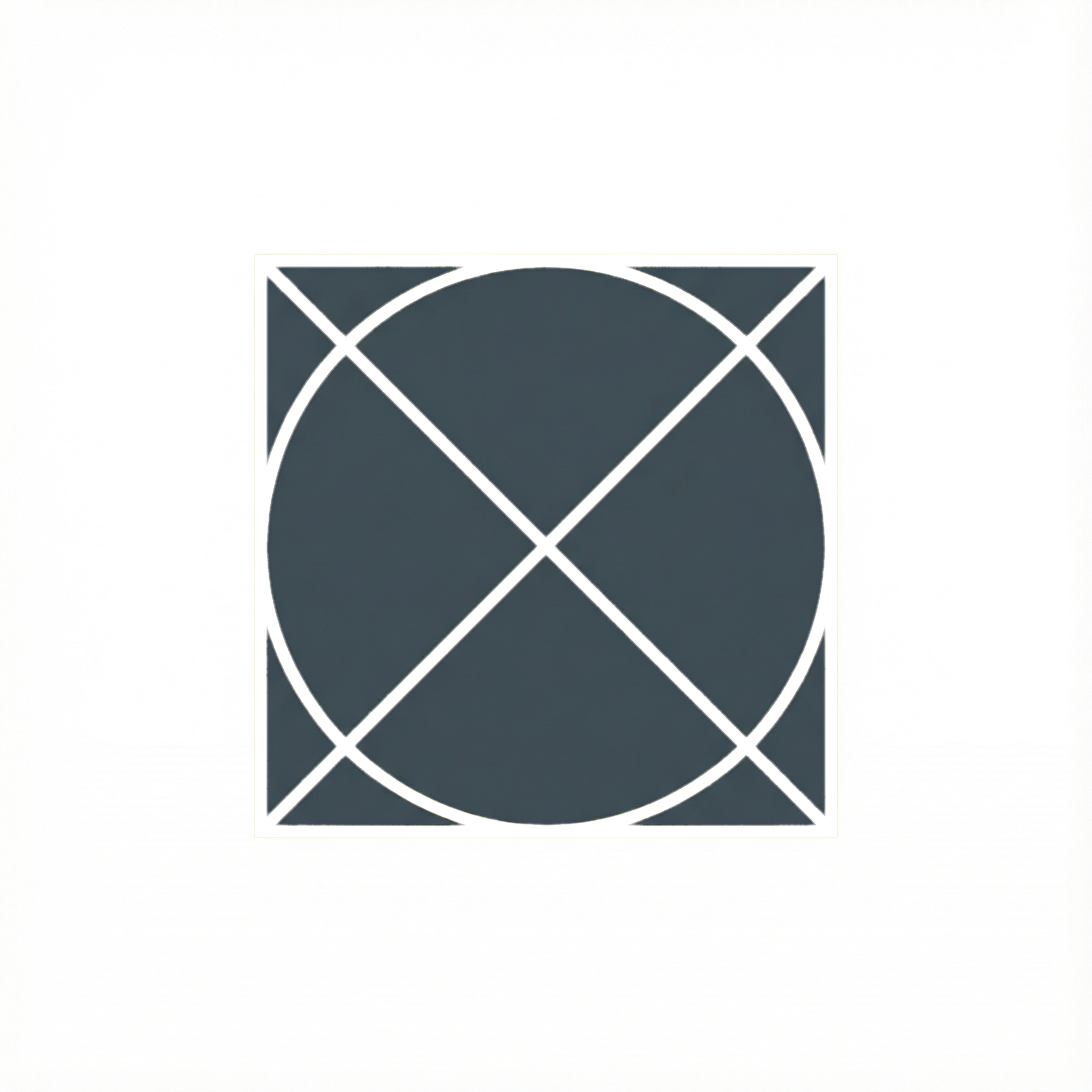

Cosmic Consciousness - The Self as Microcosm of the Universe
1. Donahue, William. "550 A New You Part 1." Lecture. *Hidden Meanings*, 2011.
The ancient Hermetic principle, "as above, so below," posits a fundamental correspondence between the individual (microcosm) and the universe (macrocosm), suggesting that human beings are miniature reflections of the cosmos. This insight, central to mystical traditions, is affirmed by modern psychology, particularly Carl Jung's work, which proposed that the psyche is structured according to universal principles. The archetypes of the collective unconscious reflect these cosmic patterns, suggesting that the process of individuation mirrors the evolution and organization of the cosmos itself. Thus, the human experience is inextricably linked to the vast, governing forces of the universe, extending beyond mere physical influences into the realm of psychic structure.
This profound connection is not merely philosophical but grounded in physical reality: we are literally composed of stardust. The atoms constituting our bodies—except for hydrogen—were forged in the nuclear furnaces of massive stars that exploded as supernovae billions of years ago. This scientific fact means that the universe is becoming conscious of itself through us. Understanding the self as a cosmic entity opens new avenues for exploring consciousness, identity, and our role in the greater scheme of existence, positioning the story of the self as beginning not with birth, but with the Big Bang itself. [Image blocked: Human silhouette dissolving into starfield]
The patterns governing the cosmos—principles of self-organization, physics, and the tendency toward increasing complexity—are the same forces shaping life and consciousness. This is evident in the universe's fractal nature, where similar organizational structures repeat across vastly different scales. For instance, the cosmic web of galaxies, superclusters, and voids shares striking organizational principles with the neural networks of the human brain, exhibiting self-organization and complexity. This fractal quality suggests the universe is a unified whole where the microcosm reflects the macrocosm because both are expressions of the same underlying, unifying principles.
Jung’s concept of the Self embodies this fractal unity, acting as the organizing center of the psyche while simultaneously reflecting the cosmic order. The Self is both personal and transpersonal, representing the point where the individual meets the universal. Realizing the Self involves encountering a cosmic principle, an organizing pattern that structures both the inner world of the psyche and the outer reality of the cosmos. [Image blocked: Neural networks mirroring galactic structures]
If consciousness is not an accidental byproduct but a fundamental property of the cosmos, as suggested by panpsychism, then human awareness is merely a highly organized expression of something present at all levels of reality. This view suggests that the universe itself possesses a form of cosmic consciousness, aligning with mystical concepts like the Hindu Brahman or the Buddhist Buddha-nature. From this perspective, Jung’s collective unconscious is not just a repository of human memory but a direct connection to the fundamental, structuring patterns of the cosmos, making the archetypes cosmic principles manifesting in both matter and mind.
The emergence of human consciousness represents a crucial transition in the universe's evolution, allowing the cosmos to observe and reflect upon itself. This process, termed "cosmogenesis" by Teilhard de Chardin, views the evolution of consciousness as the central narrative of cosmic development, moving toward greater complexity and awareness. We are not passive observers but active participants in this evolution; our individuation—the psychological journey toward integration and awareness—is a microcosmic reflection of the universe's own awakening.
The ultimate goal of individuation is alignment with this cosmic order, moving beyond ego-consciousness to Self-consciousness, recognizing one's essential unity with the whole. The direct realization of this unity, often termed "cosmic consciousness," is a profound mystical experience characterized by the transcendence of self-boundaries, a sense of unity with all existence, and deep peace. This experience confirms that the individual is not separate but an integral expression of the universe, where the personal journey of self-realization is simultaneously a participation in the cosmic evolution of awareness. [Image blocked: Mandala representing cosmic unity]
Sources: Inspired by William Donahue's lecture "550 A New You Part 1" Carl Jung's Analytical Psychology (Collective Unconscious, Archetypes, Individuation) Concepts from Cosmology (Big Bang, Stellar Nucleosynthesis) Pierre Teilhard de Chardin's The Phenomenon of Man (Cosmogenesis, Omega Point) Hermetic Philosophy ("As Above, So Below")